
If your home is on a private well in the Farmington Valley, your water works hard before it reaches your faucet. It travels through bedrock and soil rich in minerals, metals, and dissolved compounds, picking up a little of everything along the way.
Most of it is invisible. Some of it is not. And almost none of it shows up on a label.
After 75 years of testing and treating well water throughout Hartford and Litchfield Counties, we have a clear picture of what Farmington Valley water contains and what it does to the homes it runs through. Here is a breakdown of the most common problems we see, what to watch for, and what actually fixes them.
Hard Water
Hard water is the most widespread well water problem in this region, caused by high concentrations of calcium and magnesium dissolved in the groundwater.
Hard Water Warning Signs & Solutions
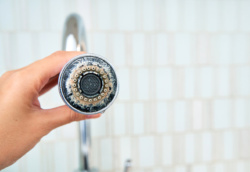
Scale buildup on faucets, showerheads, and around drains is the most visible sign. You might also notice that soap does not lather the way it should, that your dishes and glassware come out of the dishwasher with a cloudy film, or that your skin and hair feel dry after a shower. Over time, hard minerals build up inside appliances and reduce their efficiency and lifespan.
A water softener exchanges calcium and magnesium ions for sodium or potassium through a process called ion exchange. The result is soft water throughout the house. Keep in mind, water softeners need periodic salt or potassium chloride refills and an annual service check, but rest assured they are reliable and well proven for hardness treatment.
Iron
Iron shows up in Farmington Valley well water in a few different forms, and the type matters for treatment.
Warning Signs of Iron in Water & Solutions
Rust-colored or reddish-brown staining in sinks, toilets, tubs, and on laundry is the clearest indicator. Water may also taste metallic or have a slight odor. In more severe cases, the water itself may appear discolored when it first comes out of the tap. Iron also accelerates buildup inside pipes and fixtures, reducing flow over time.
An iron filter, also called an oxidizing filter, removes dissolved iron before it reaches your fixtures. The right system depends on the type and concentration of iron in your water, so a water analysis is the necessary first step. In some cases, a water softener alone handles low levels of dissolved iron, but higher concentrations need dedicated filtration.
Low pH / Acidic Water
Acidic water is a quieter problem than iron or hardness, but it is potentially more damaging to your home over time.
Warning Signs of Acid in Water & Solutions
Blue-green staining near drains, on fixtures, and inside toilet bowls strongly indicates acidic water corroding copper plumbing. You might also notice pinhole leaks in copper pipes that seem to develop without any obvious cause, or a slightly metallic or sour taste in the water. If your home has older plumbing and you see unexplained leaks in multiple locations, it’s worth testing for low pH.
An acid neutralizer, also called a calcite filter, raises the pH of the water by introducing neutralizing media as it passes through the system. This brings the water into a safe range and stops the corrosive action on your pipes and fixtures.
Sulphates and Chlorides
Sulphates and chlorides are naturally occurring compounds that enter groundwater from soil and rock, and both can make water taste or smell off.
Warning Signs of Sulphates in Water & Solutions
A faint sulfur or rotten egg odor is the most noticeable sign of sulphates in well water. Chlorides add to a salty or brackish taste. High chloride levels also accelerate corrosion in plumbing and appliances. These issues frequently occur in older wells or wells that haven’t been inspected in several years.
Treatment depends on the specific compounds and their concentrations. Activated carbon filtration handles many taste and odor issues related to sulphates and chlorides in your drinking water. Whole home treatment may combine filtration methods based on what the water analysis shows.
Dissolved Minerals and Sediment
Beyond the specific compounds above, Farmington Valley well water often carries a general load of dissolved minerals and fine sediment. This is particularly common after heavy rain or in wells that draw from shallower depths.
Warning Signs of Minerals and Sediment in Water & Solutions
Cloudy or turbid water, sediment visible in a glass or in toilet tanks, and frequent clogging of aerators and appliance inlet screens are all signs. Sediment also accelerates wear on appliances including dishwashers, washing machines, and water heaters.
A filter installed at the point of entry captures particulates before they enter the home. These are often used as the first stage in a multi-system treatment approach, protecting downstream filtration equipment and appliances.
The Right Answer Starts with a Water Test
The single most important thing to understand about Farmington Valley well water is that no two homes have the same water profile. A neighbor’s iron filter may do nothing for your hardness problem. A water softener alone may leave your pH issue untreated. The only way to know what your water actually contains and what it needs is to test it.
At Avon Plumbing & Heating, we start every water treatment recommendation with a water analysis. From there, we design a treatment approach based on what is actually in your water, whether that is a single system or several working together.
Our water and well system services include water analysis, iron filtration, water softeners, acid neutralizers, UV disinfection, reverse osmosis systems, and whole home filtration. Our licensed plumbing team handles all installations, and our Parts Department at 124 Simsbury Road offers replacement filters, salt, and water treatment supplies.
If your well system is showing signs of a larger problem, such as a sudden loss of pressure, discolored water throughout the house, or no water at all, those are signs of a system issue that needs immediate attention. Our emergency service team is available 24 hours a day at 860.677.9721.
Good water is not complicated. It just starts with knowing what you are dealing with. Contact us to schedule a water analysis or talk through your options.
